ML Model Deployment: Cut Costs 90% With Decentralized Infrastructure
Try VOLT Intelligence
Get StartedTry VOLT Cloud
Deploy GPUTable of Contents
- AI Model Deployment and the Current State of Cloud
- Deployment Model Architecture Breakdown
- Cloud Dependencies
- Why ML Model Deployment Fails at Scale
- Vendor Lock-ins and Dependencies
- Alternative Infrastructure Models
- VOLT’s Decentralized Model Deployment Solution
- GPU Fabric Architecture
- Vendor Neutrality
- Performance Data: VOLT vs Traditional Cloud
- A Real World Model Deployment Case Study
- ML Model Deployment Best Practices
- Switching to Decentralized Model Deployment
A model deployment crunch has been quietly threatening AI startups and scale-ups. Between 87-90% of ML projects never reach production, while cloud costs continue to rise at an alarming rate of 30% per year. With Big Tech cloud providers signalling they are more interested in protecting their bottom line than in helping drive the next great technological revolution, a model deployment crises of existential proportions looms over AI innovators.
So what exactly is going on, why do so few models ever make it to production, and how can you make sure yours doesn't not suffer the same fate? Before getting to these these questions, let's unpack exactly what AI model deployment and cloud infrastructure look like in their current state.
AI Model Deployment and the Current State of Cloud
Model deployment is the process of integrating a trained machine learning model into a production environment. Simply put, it is the bridge between a model's proof of concept and its full utilization by users.
Deployment Model Architecture Breakdown
Successful ML model deployments require orchestrating multiple layers of infrastructure.
- Containerization: Creates consistent execution across environments by packaging models with dependencies.
- API Gateways: RESTful APIs expose model predictions to applications, handling authentication, and request routing.
- Orchestration: Kubernetes manages container lifecycles, scaling decisions, and resource allocation
- Monitoring: Tools like Prometheus track model performance and system health.
Cloud Dependencies
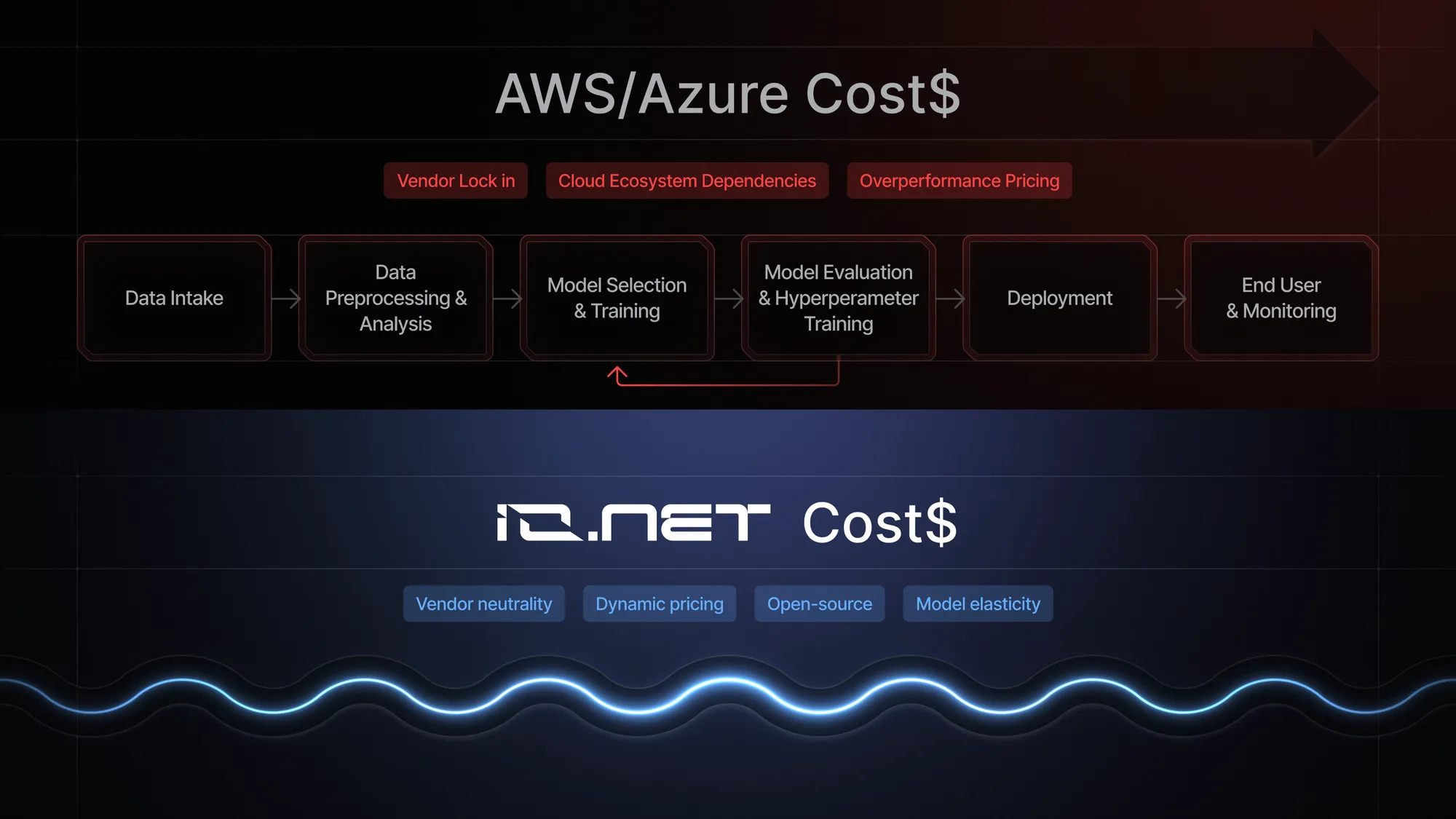
To capitalize on the recent surge in popularity of AI model development, traditional cloud providers have creating artificial bottlenecks that impose high vendor lock-ins with premium pricing models for infrastructure that sits idle for 60-80% of the time. Thesepredatory pricing models play a big role in whyonly 32% of ML model deployments ever successfully move from pilot to production.
Why ML Model Deployment Fails at Scale
There are several reasons that machine learning models fail to deploy. Two of the biggest are cloud waste (idle resources) and vendor lock-ins and the other dependencies this creates.
Cloud Waste: The Hidden Budget Killer
Cloud providers have imposed unfair pricing on bootstrapping AI teams. This inclucespricing access to critical GPU resources at overperformance rates throughout the entirety of the contract, rather than only when required, while also obfuscating the true cost of compute on their platforms. This results in resources sitting idle during periods outside of direct training, teams being forced to overpay for services they aren’t utilizing, or innovation stagnating due to developers becoming hesitant to deploy for fear of overspending. In fact, more than three-quarters (78%) of developers have allocated less than 75% of their cloud spend.
Vendor Lock-ins and Dependencies
After AI teams are trapped inextended lock-in contracts, they also find themselves locked into and dependent upon proprietary ecosystems. AWS SageMaker, Google Cloud AI Platform, and Azure Machine Learning all require platform-specific configurations, making migration impossible. It’s an age-old problem in enterprise software but a real killer of product launches in the fast-paced world of AI model development.
Alternative Infrastructure Models
Decentralized platforms like VOLT offering alternative models for AI teams. Oneswhere decentralized deployment is spread globally across 130+ countries, reducing latency, and eliminating single points of failure and forced pricing.
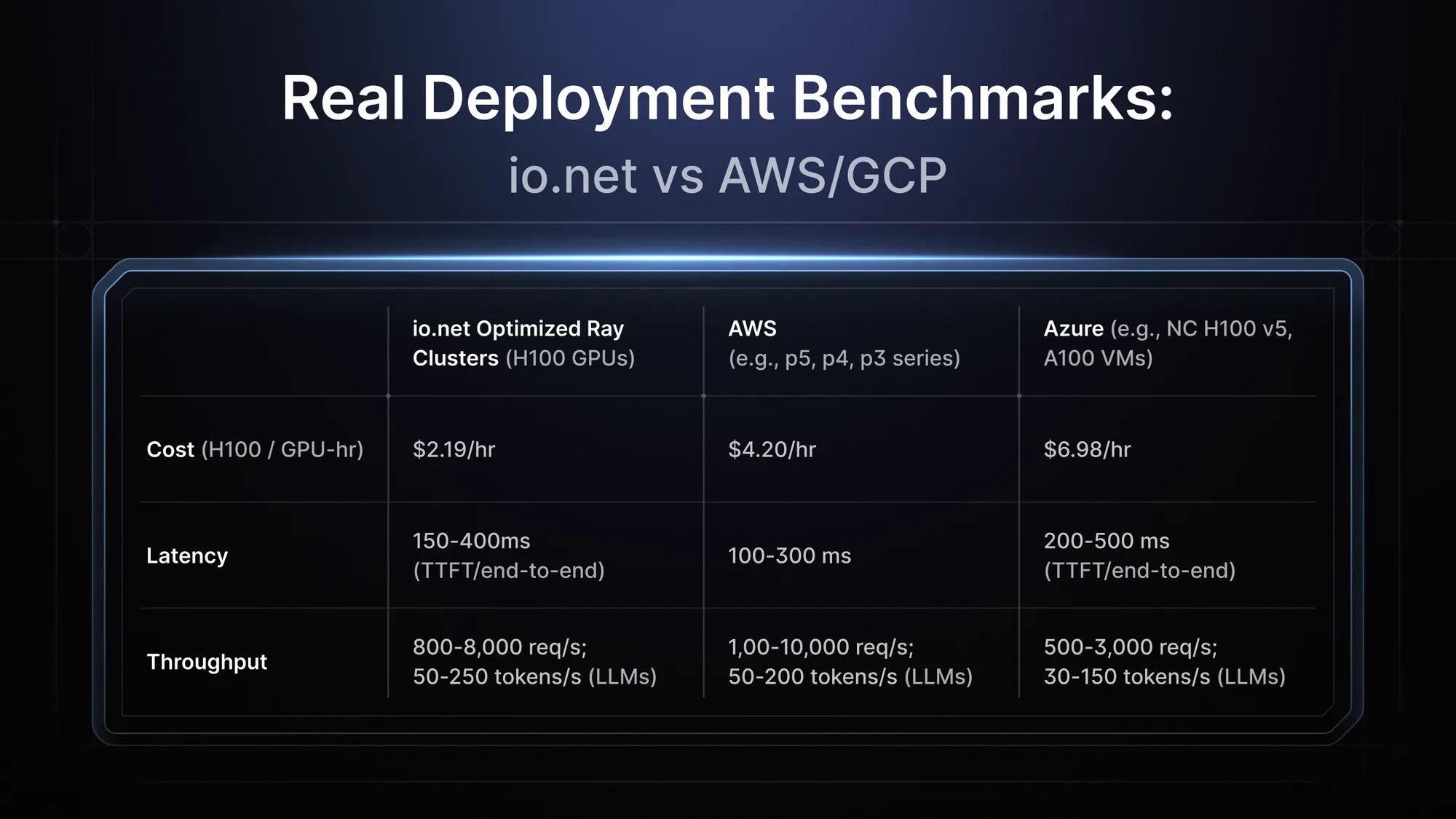
Consider that on AWS, 100x H100 costs ~$300K/month, but on VOLT, those same H100s cost ~$30K/month—saving teams $270K/month. That is a 90% cost reduction. Decentralized platforms achieve this by eliminating overhead through aggregating underutilized GPU resources from independent data centers, crypto miners, and consumer hardware, rather than concentrating resources into massive data centers that require immense start-up and ongoing maintenance fees.
VOLT’s Decentralized Model Deployment Solution
In particular, VOLT’s decentralized platform model offers some key advantages over traditional cloud providers like AWS and Google Cloud Platform.
GPU Fabric Architecture
By aggregating computing power through a decentralized network, VOLT offers users the exact same compute power for 90% less than traditional providers. And wherecloud providers typically take weeks for provisioning clusters, VOLTintelligently groups resources into clusters within minutes.
Vendor Neutrality
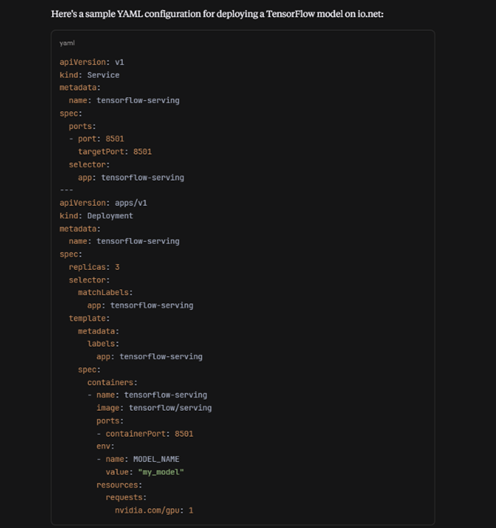
Unlike cloud providers that force teams to conform to their proprietary deployment ecosystems, VOLT supports standard machine learning model deployment frameworks. This model elasticity allows models to migrate between frameworks. Teams can easily access and utilize:
- MLflow: For experiment tracking and model versioning
- TensorFlow Serving: For high-performance model inferences
- Kubernetes: For container orchestration and scaling
Performance Data: VOLT vs Traditional Cloud
A Real World Model Deployment Case Study
The advantages of decentralized deployment aren’t merely theoretical. Real-world projects like Toyota Woven have already been able to reduce their model training time from 48 hours to 1 hour by distributing their workloads across VOLT’s decentralized GPU network. Toyota Woven achieved this while also seeing a 30% model accuracy improvement through increased hyperparameter experimentation, and a 50% reduction in their TCO that would have been impossible under traditional cloud providers.
ML Model Deployment Best Practices
When choosing a deployment framework for their model deployment, there are several steps every project should follow to maximize its chances of success.
- Decentralize Infra: Decentralized platforms are better optimized for efficient ML model deployment. Decentralized platforms increase availability, shorten wait times, remove lock-in contracts, and enhance the overall security of compute resources by eliminating single points of failure.
- Benchmark Latency Before Scaling: Analyzing a project’s baseline performance across different geographic regions before deployment can help teams identify what the true cost of scaling may be before they are hit with a surge in fees. Fortunately, VOLT’s distributed network allows A/B testing of model performances across regions and different hardware configurations, giving teams the full picturebefore they commit financially.
- Utilizing Vendor-Neutral Frameworks: Opting for open-source standards like Docker, Kubernetes, and standard ML frameworks instead of proprietary cloud frameworks with barriers and bottlenecks enableteams to achieve full elasticity and model migration when needed most.
- Monitor Resource Utilization: Considering that 83% of organizations still spend an average of 17% of their EC2 budgets on previous-generation technologies, cloud obfuscation remains a common issue. Teams should constantly monitor their deployment and GPU usage to ensure they are receiving the best value for their investment. Leveraging decentralized platforms like VOLT provides up-to-date, dynamic interfaces, while enabling full elasticity and easy migration across hardware.
Switching to Decentralized Model Deployment
The good news is that the model deployment crisis we are currently facing isn’t a technical crisis—it’s an economic one. There are more than enough available GPUs to go around, but the reality is that 80% of ML projects stall out and fail to deploy due to the costs imposed by traditional cloud providers, making experimentation and ultimately survival prohibitively expensive for teams.
By simply switching to decentralized infrastructure, those same teams can cut their GPU compute costs by 90%, deploy models in 90 seconds compared to weeks, scale globally without high vendor lock-in fees, and increase their overall resource utilization from 20-40% to 80-95% efficiency through dynamic usage pricing.
The ~15% of projects that successfully navigate their model deployment and reach full production aren’t necessarily better engineered—they’re deployed on better, cheaper infrastructure.
Join them by deploying smarter with VOLT today.