
A Robotics Team Challenge: Proving their crowdsourced data could power breakthrough navigation AI through reliable AI infrastructure
Key Results:
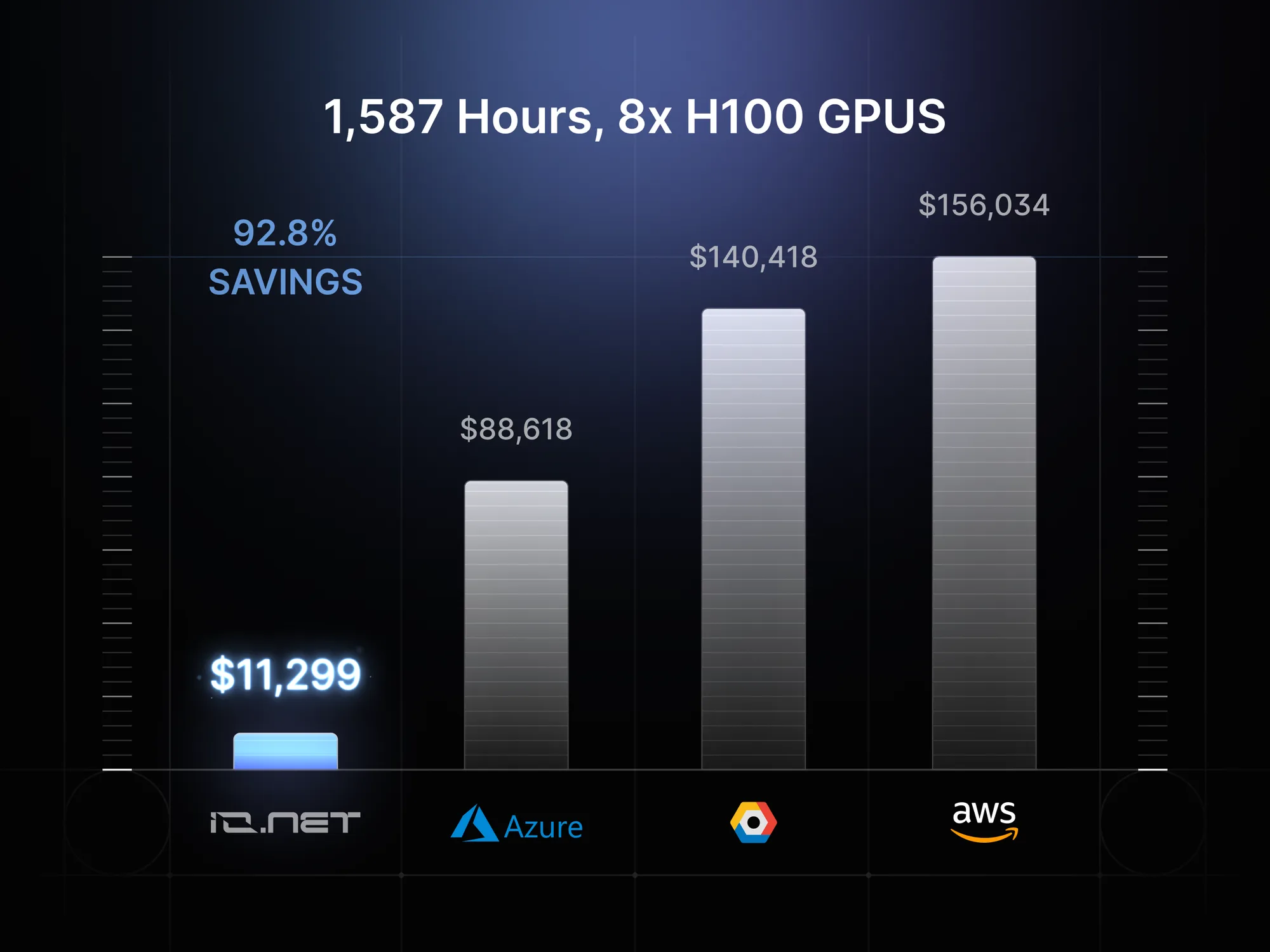
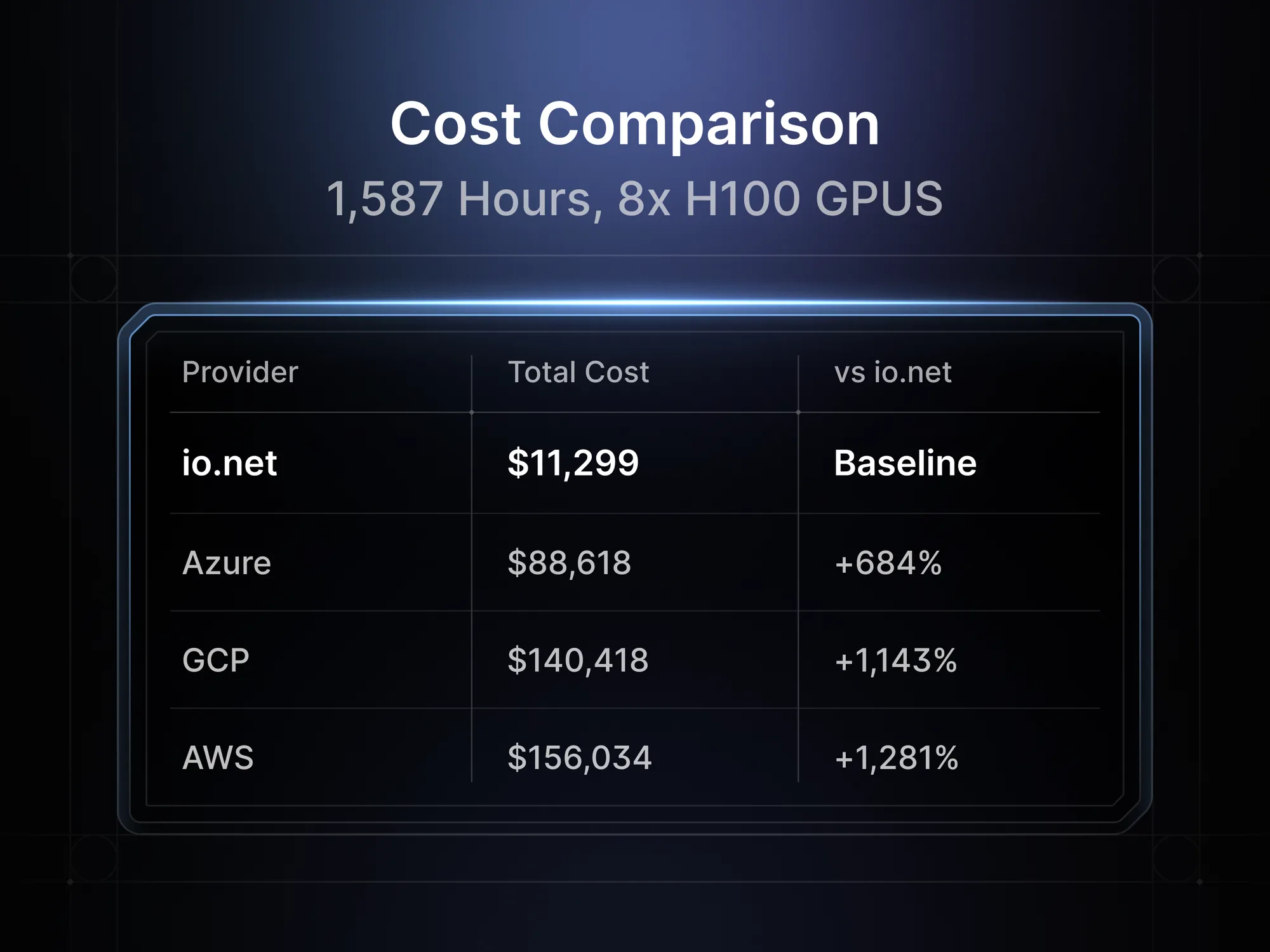
- a large share cost savings compared to Amazon Web Services’ H100 pricing
- thousands of GPU hours across 8 GPUs with zero failures
- 66-day project duration with seamless deployment
- 5TB storage provisioned in 30 minutes vs. days with Big Tech cloud providers
- AI infrastructure reliability that led to 85.7% navigation success
Overview
, a Singapore-based AI robotics startup, transformed their approach to data validation by partnering with a university Robotic AI & Learning (RAIL) Lab and VOLT to prove their crowdsourced navigation dataset could power breakthrough AI research. Initially struggling to demonstrate the value of their 2,000+ hour navigation dataset (25 times larger than any competitor), a robotics team needed reliable machine learning infrastructure to support rigorous academic research that would validate their data assets.
Through VOLT Cloud's on-demand, high-performance GPU cloud computing platform, the collaboration successfully processed thousands of GPU hours, including a continuous 10-day training run across 8 GPUs without failures. a university's research achieved an 85.7% navigation success rate compared to just 33.3% for baseline methods. The partnership resulted in a peer-reviewed research paper, global validation across 6 countries, and positioned a robotics team as a leader in embodied AI research.
The Challenge
About A Robotics Team
a robotics team raised a substantial sum in funding from investors including Protocol VC, Robinhood Ventures, and Robinhood co-founders. The 12-person team has built an innovative "robotic gaming" platform where players earn rewards by remotely controlling real robots to complete navigation missions worldwide.
a robotics team operates robots across multiple cities, collecting extensive navigation data from real-world deployments. The company had accumulated over 2,000 hours of valuable navigation data from 10+ cities worldwide - a dataset 25 times larger than other publicly available navigation datasets. However, they faced a critical challenge: how to demonstrate this dataset's value for advancing AI research.
The Strategic Problem
Traditional data licensing wasn't enough. a robotics team needed to prove their dataset could train breakthrough navigation models that work in any environment, but academic researchers consistently struggled with compute limitations. Without adequate research infrastructure, even the most valuable datasets couldn't reach their full potential.
The company recognized that to establish thought leadership and validate their data assets, they needed to move beyond simple licensing. They had to invest in enabling world-class research that would definitively prove their dataset's value for training generalist navigation models.
The Solution
Why A Robotics Team Chose VOLT's AI Infrastructure
When a robotics team and a university's RAIL Lab assessed what they would require to execute on their ambitious research project, they realized they needed AI infrastructure that could handle the demands of cutting-edge research. The project required processing 2TB of navigation data through week-long training runs without interruption.
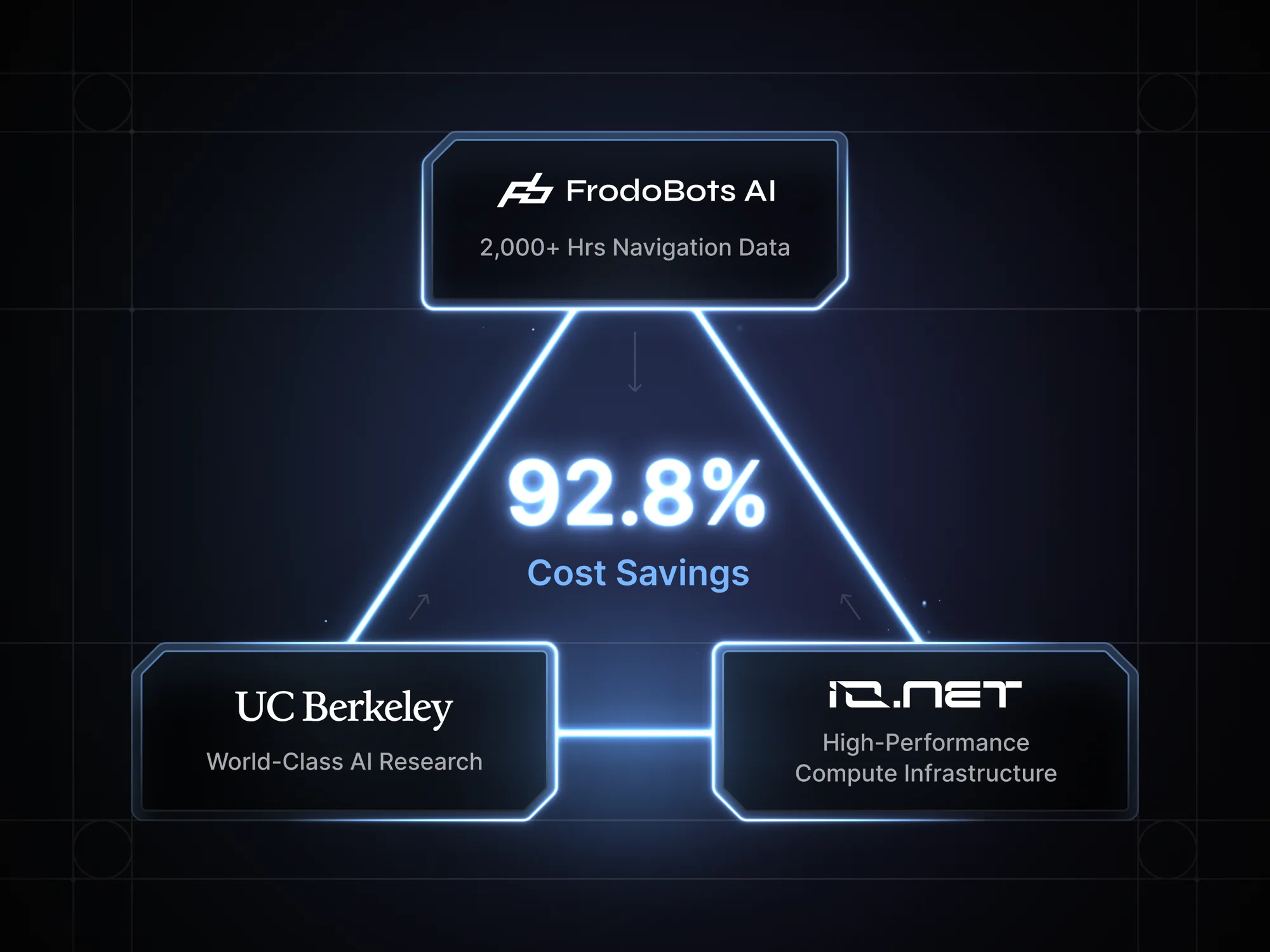
a robotics team provided their unique navigation dataset, a university robotics lab conducted the research, and VOLT sponsored the GPU cloud computing infrastructure to make breakthrough research possible.
But the RAIL Labs team needed more than just raw compute power. When the research required additional storage to handle massive datasets, VOLT's technical team quickly provisioned over 5 terabytes of additional local storage in 30 minutes - compared to days with traditional cloud providers.
The Implementation
From Feb 24 to May 1st, 2025, a university robotics lab used dedicated H100 nodes through the team's partnership with VOLT for 66 days straight. VOLT Cloud's machine learning infrastructure supported 12,696 total GPU hours, including one continuous 10-day training run across 8 GPUs without interruption while processing 6,000 hours of trajectory data.
The integration process proved remarkably smooth. As the researcher noted, "Transferring our PyTorch-based codebase to the VOLT server was straightforward. The dedicated AI infrastructure approach proved far superior to alternatives. The setup was like having a dedicated machine in our lab specifically for our project, which was a welcome relief from the hassle of borrowing resources from other cloud platforms."
Beyond compute power, VOLT's responsive technical support became crucial when research needs evolved. When the team required additional storage capacity to handle their massive datasets, VOLT's technical team provisioned over 5TB of additional local storage in just 30 minutes - a process that typically takes days with Big Tech cloud providers.
The infrastructure delivered consistent performance throughout the entire 66-day project timeline, enabling researchers to focus on their work rather than managing technical bottlenecks or dealing with the preemption issues common in shared cloud environments.
The Results
AI Infrastructure That Enabled Research Breakthrough
The partnership delivered exactly what a robotics team needed: the infrastructure reliability to enable breakthrough AI research. a university robotics lab successfully published a peer-reviewed research paper demonstrating how the team's navigation data could train generalist navigation models - research that was only possible because of VOLT Cloud's on-demand, high-performance GPU cloud computing capabilities.
As a robotics team its CEO explains, "Having a university robotics lab, one of the world's top robotics research institutions, spend significant time publishing peer-reviewed research that produced state-of-the-art results with our dataset definitely helped publicly validate and add legitimacy to the team's mission." This breakthrough was enabled by VOLT Cloud's ability to provide uninterrupted training sessions and rapid storage scaling capabilities that Big Tech cloud providers and university resources couldn't match. VOLT Cloud enabled validation across 6 countries spanning 3 continents, providing the consistency needed for global-scale testing.
Technical Validation
The AI infrastructure delivered exactly what the research demanded: thousands of GPU hours, including a 10-day continuous run without a single failure. the researcher emphasizes how VOLT's approach differed: "Compared to other cloud compute providers like AWS or Google's TPU Research Cloud, working with VOLT was extremely smooth. We had access to a consistent, dedicated machine rather than dealing with virtual machine instance setups that could get preempted."
The ease of onboarding with VOLT was just as crucial for the RAIL Labs team. "Transferring our PyTorch-based codebase to the VOLT server was straightforward. It was like having a machine in our lab specifically for our project," the researcher notes. This reliability was key for the demanding computational requirements, as she explains: "With our lab's machines constantly overloaded and cloud resources being unreliable, VOLT's dedicated approach let us process 2TB of navigation data and complete week-long training runs that would have been impossible elsewhere."
Key Performance Insights
- Speed: 5TB storage in 30 minutes vs. days elsewhere
- Reliability: thousands of GPU hours without preemption vs. constant interruptions
- Cost: a large share cost savings vs. AWS pricing
This machine learning infrastructure advantage has translated into concrete business results for a robotics team. As its CEO explains, "We actually have about a dozen ongoing research collaborations with other university labs at the moment, but having the first one with a university set the stage for the rest, and gave teeth to our positioning as a world-class collaboration partner."
Beyond immediate research outcomes, the partnership demonstrates how modern AI infrastructure can accelerate academic breakthroughs. As Cho notes, "Having VOLT involved in this collaboration has been an important step towards showing researchers that crypto, when done well, can really move the needle for them and help them to do their best work."
About This Partnership
This case study showcases how AI startups can leverage strategic compute partnerships to validate their data assets and establish academic credibility. Had a robotics team used AWS pricing, the compute would have cost $144,735 more (a large share premium), demonstrating how efficient GPU cloud computing partnerships can make rigorous academic research economically viable while delivering breakthrough results.
Ready to accelerate your AI research partnerships?
or contact our team to discuss your infrastructure needs.